
“Pure Michigan” is one of the longest running and most successful tourism ad campaigns in recent memory, showcasing the scenic wonders and pristine lakes the state is known for. But if you were to ask many Michigan residents, they are likely to tell you that the Great Lake State is anything but “pure.” Flint still doesn’t have clean drinking water years after a massive lead contamination drew headlines from around the world. Even now as Flint struggles to provide clean water for its citizens, the next Michigan water crisis is developing throughout the state.
Per- and polyfluoroalkyl substances (PFAS) are a group of man-made chemicals that includes PFOA, PFOS, GenX, and several other chemicals. PFAS contains unique physical and chemical properties that were highly coveted in manufacturing. They repel water and oil, are extremely temperature resistant, and reduce friction. For decades, PFAS were used in numerous consumer and industrial products, including firefighting foam, food packaging, and the water repellant Scotchgard, to name a few. The chemicals are also highly toxic and hazardous to humans and animals, leading to their ban in the early 2000s following years of scientific studies and lawsuits.
What once made PFAS such high-demand chemicals are also what is causing major environmental contamination today. PFAS remain persistent in the environment without breaking down the way most substances do, allowing the chemicals to easily seep through soil and contaminate groundwater years after the initial contamination.
Once ingested, the chemicals continue to build up over time and remain unchanged in the body. PFAS are associated with numerous illnesses, including multiple types of cancer, thyroid disease, low birth weight, elevated liver enzymes, chronic kidney disease, and high cholesterol.
The initial discovery of PFAS in Michigan occurred in Osconda, at the former site of the Wurtsmith Air Force Base, where the chemical had been regularly used as a fire suppressant. The total levels of PFAS found in the groundwater and soil at the base were astronomical – measuring as high as 1.2 million parts-per-trillion (PPT). Residents near the base were warned not to drink their tap water, and testing of water from an old hydrant indicated that residents of the base were exposed to high levels of PFAS.
Since then, traces of PFAS in varying amounts have been discovered in counties across the state.
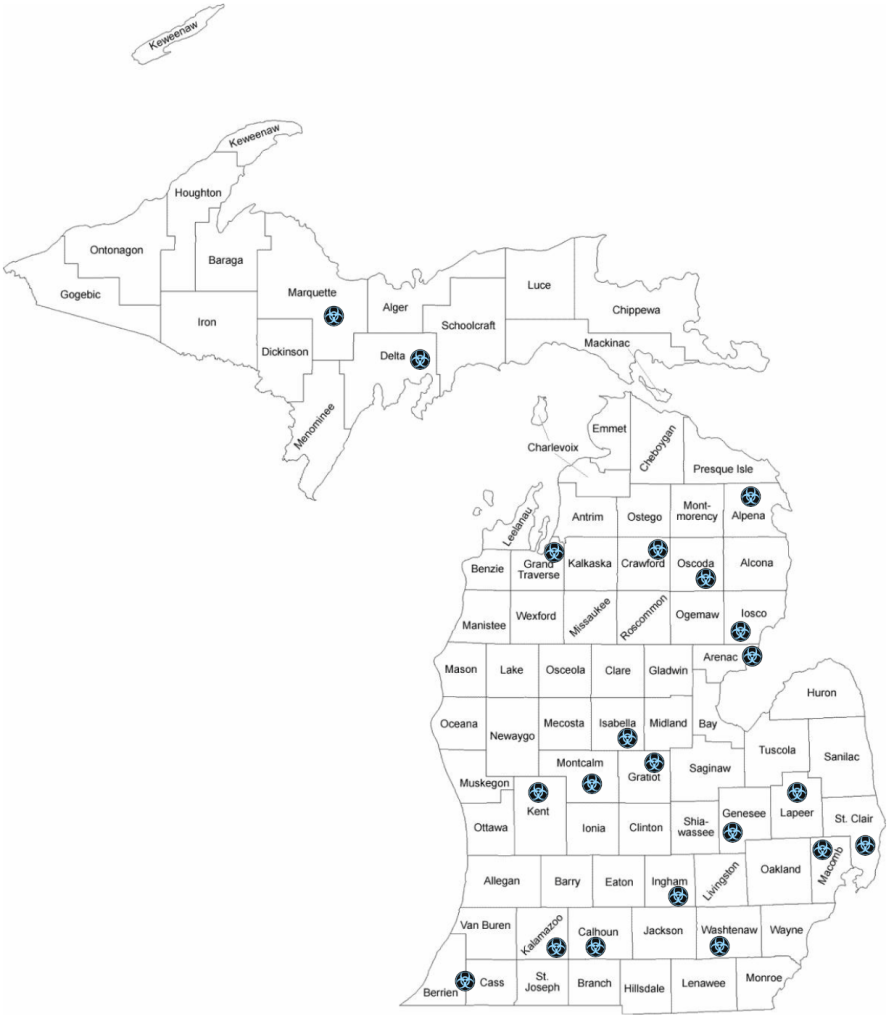
Map detailing counties in Michigan where PFAS has been detected. Marker placement does not indicate the exact location(s) where PFAS contamination occurred.
The Michigan Department of Environmental Quality and the Environmental Protection Agency are continuing to test water samples across the state, but it seems like the more they search, the more PFAS they find. The chemical has turned up in small towns with less than 2,000 residents, city water reservoirs and private wells, and even in elementary school water supplies.
And while residents are still coming to grips with the latest Michigan water crisis, PFAS have been found in other states around the country, including Colorado, Pennsylvania, New York, and North Carolina.
We know that these chemicals were widely used for years, and we know that they persist in the environment without breaking down. What we don’t know is when or where we’ll find them next.
Wexler Wallace is currently investigating claims regarding the contaminated groundwater sites. If you are a resident of an affected area and have suffered injury or property damage due to PFAS exposure, contact us to discuss your potential claim.
0 Comments